
Balancing the demands of growing children, aging parents, and a career places members of the "sandwich generation" in a relentless holding pattern, often leaving them running entirely empty. The presentation, "The Sandwich Generation: Are You Running on Empty?", presented by James DeVary of Senior Helpers of Gilbert & Chandler, examined the realities of this dual caregiving role and offered actionable pathways toward sustainable relief.
The presentation centered on professionals caught in the middle: raising dependent children while simultaneously caring for aging parents and running a career or business. Positioned as the central "filling" in that dynamic, these individuals often carry the full weight of family and professional responsibilities with little margin to spare.
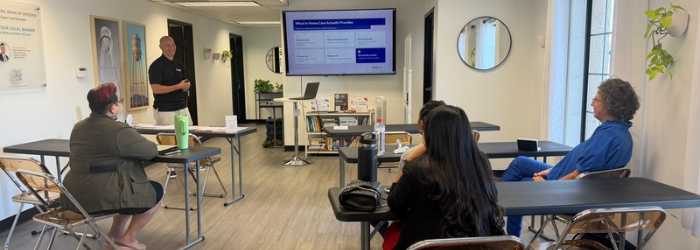
A major theme of the discussion was untangling everyday stress from deep caregiver burnout. While typical stress resolves after a weekend of rest, burnout persists for weeks or months, leaving caregivers detached, numb, and physically running on empty. The session outlined how this manifests across physical symptoms like unrelenting fatigue and skipped medical appointments, emotional reactions like irritability and guilty resentment, and professional struggles like slipping decision-making, missed deadlines, and withdrawal from colleagues or clients.
The conversation then broadened to explore how this pressure ripples outward. Unaddressed caregiving fatigue rarely stays contained; it strains relationships with partners and children, and it jeopardizes business operations when attention is divided by sudden family crises. Crucially, the presentation cited hospital discharge data revealing the clinical risks: when an exhausted caregiver misses even a single routine task, such as post-discharge medication management, patient readmission rates and medical complications climb substantially. Caring for the caregiver directly safeguards the patient's health.
To offer relief, the session mapped out existing safety nets and resources available to families. Key takeaways included federal protections and programs such as FMLA leave, specialized VA caregiver support, medical tax deductions, and the Medicare GUIDE Model offering dementia navigation and respite funding. The event also highlighted local East Valley resources, including the Area Agency on Aging’s 24-hour Senior Help Line, peer caregiver support groups, community meal networks, and non-medical in-home care services, ranging from personal hygiene and transportation to scheduled respite care that provides families with planned relief.
The event concluded with an essential mindset shift: asking for help is not giving up on a loved one, but the very strategy that allows a caregiver to keep showing up sustainably. Support systems are not a mark of weakness; they are what make long-term care possible. Attendees were encouraged to take just one manageable step during the week, whether by honestly acknowledging the weight they carry, having an open conversation with family members, or saving the contact details for a local support organization before an urgent crisis occurs.