
The CATALYST recently welcomed entrepreneurs, startups, and small business owners for Strengthen & Scale: Practical Tools to Grow Your Business—a collaborative workshop focused on helping business owners build strong foundations and make informed growth decisions.
By bringing together experts in legal, insurance, banking, accounting, marketing, and financial strategy, the workshop reinforced a core message: sustainable growth happens when the right systems are in place and working together.
Building the Right Foundation
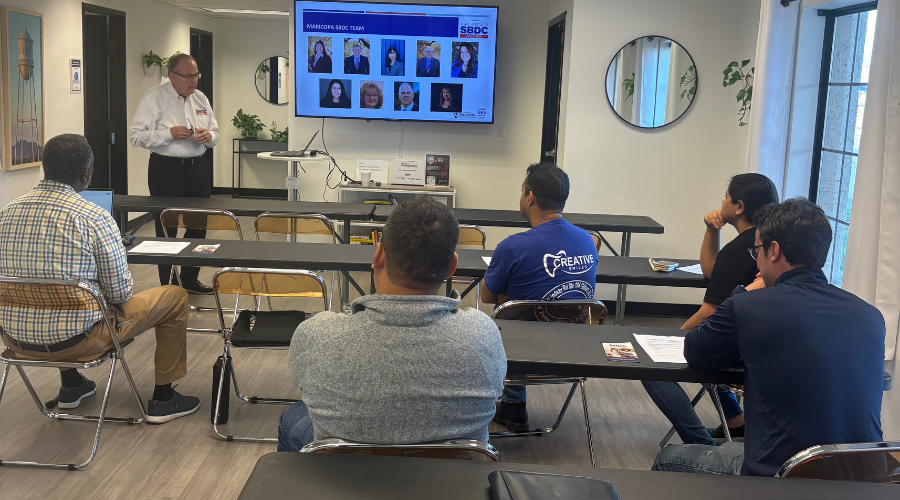
The workshop opened with insights from the Maricopa Small Business Development Center (SBDC), emphasizing that strong businesses are built on intentional structure—not guesswork. Attendees explored the importance of legal formation, financial systems, banking relationships, and insurance protection as essential pillars of long-term success.
Participants were reminded that business planning is not just a document—it’s a roadmap that helps entrepreneurs understand where they are today, where they want to go, and how to get there.
Business Insurance: Protecting What You’re Building
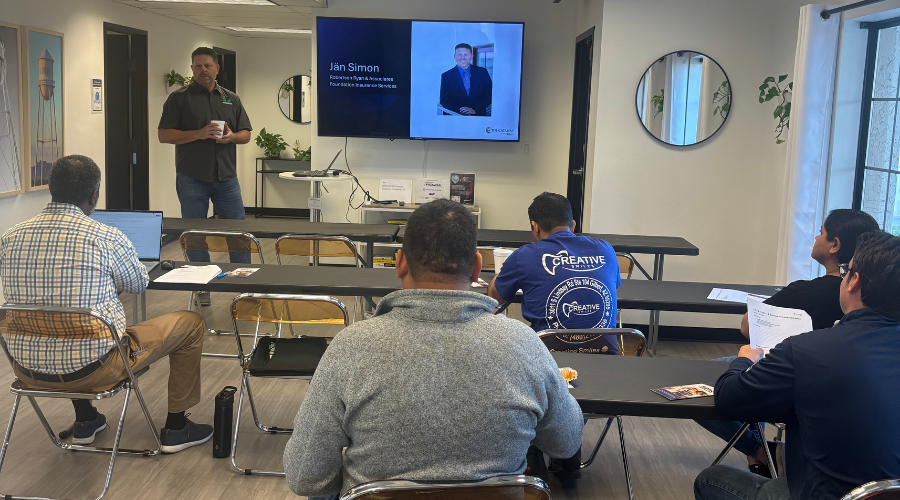
Jän Simon with Foundation Insurance Services focused the insurance session on helping business owners understand risk and coverage before problems arise. Entrepreneurs learned the difference between coverage that is legally required and coverage that is often required by landlords, lenders, or vendors.
Key topics included:
- General liability, workers’ compensation, and commercial auto insurance
- Coverage considerations for service-based businesses, retail, and growing teams
- Common risks for Arizona businesses, including slip-and-fall claims, vehicle accidents, cyber threats, and climate-related exposures
- When to review or update coverage—such as signing a lease, hiring employees, or expanding services
The takeaway was clear: insurance isn’t just a checkbox—it’s a strategic tool to protect both the business and personal assets.
Legal Considerations: Setting Your Business Up Correctly
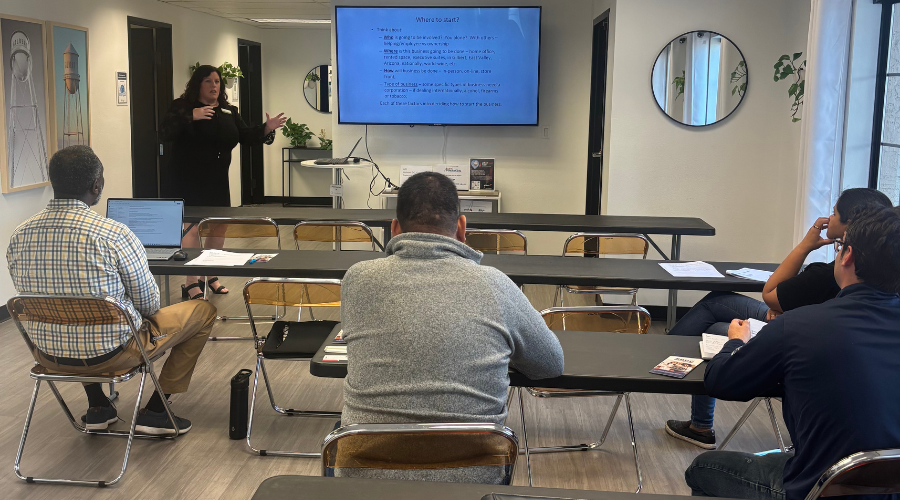
Heather Parker with The Parker Law Office led the legal portion of the workshop, reinforced the importance of choosing and maintaining the right business structure. Attendees explored the differences between sole proprietorships, LLCs, and corporations, and how each impacts liability and operations.
Discussion points included:
- Why operating agreements and bylaws matter—even though they aren’t filed with the state
- The risks of relying on handshake deals or generic online templates
- The importance of written contracts that address “what if” scenarios
- When to consult a business attorney, including at startup, during ownership changes, or when expanding
A recurring theme was organization: maintaining clean records, proper titling of assets, and clear agreements helps businesses avoid disputes and remain scalable.
Access to Capital and Smart Banking Relationships
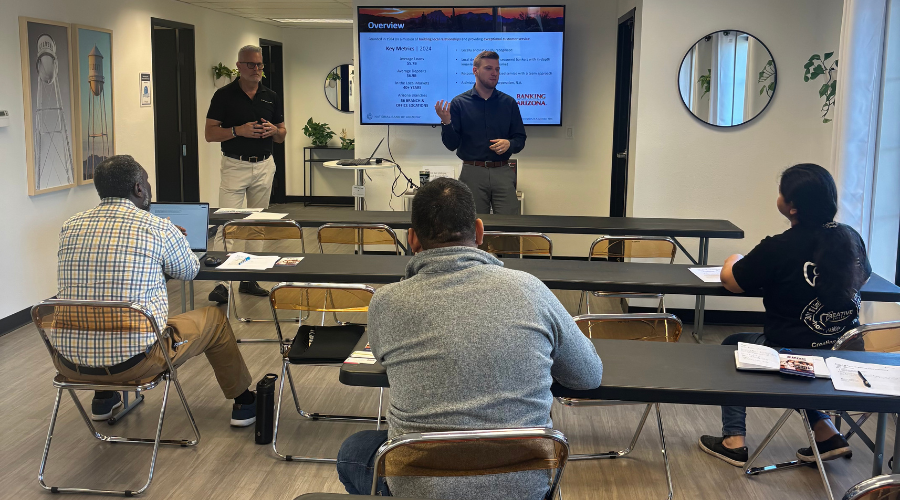
Geoff Cummings and Brennan Wemmer with National Bank of Arizona led a discussion on SBA-backed loans in supporting startups and growing businesses, as well as how these loans differ from conventional financing. Attendees gained insight into eligibility requirements, common documentation requested during the application process, and why lenders often evaluate both business and personal financial history.
A key takeaway was the importance of building a relationship with a banker early—before capital is urgently needed. Having a trusted banking partner who understands your business can open doors to financing opportunities and provide guidance as your business grows and evolves.
Accounting Systems That Reduce Stress
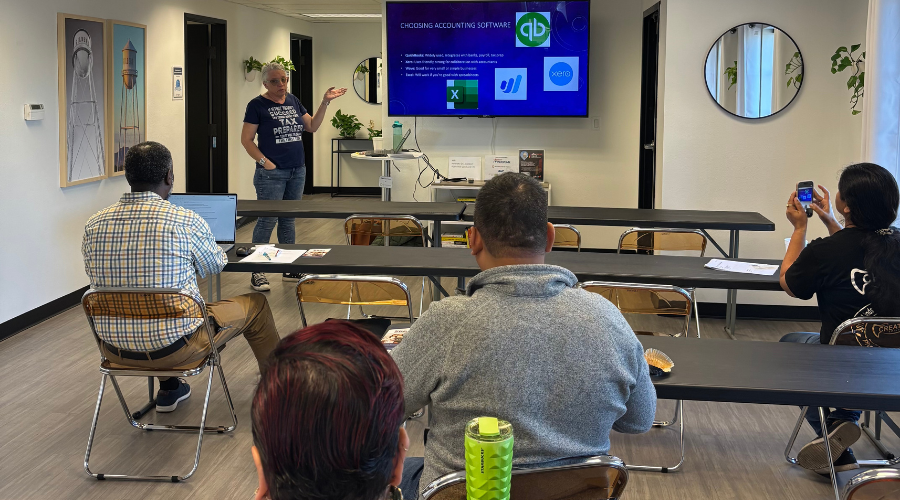
DeDe Jacques with Account on DeDe emphasized that strong financial systems are not just about compliance—they’re about clarity and confidence. Business owners were guided through practical steps for setting up and maintaining bookkeeping systems that support informed decision-making.
Topics included selecting accounting software that fits the size and complexity of the business, understanding the difference between cash and accrual accounting, and creating consistent habits around tracking income and expenses. The importance of monthly reconciliation was highlighted as a simple but powerful way to catch errors, prevent fraud, and maintain accurate records.
Attendees were also encouraged to plan ahead for tax obligations rather than reacting at deadline time. The session reinforced the idea that bringing in a professional accountant or bookkeeper at the right stage can save time, reduce risk, and support long-term growth.
Marketing with Purpose and Simplicity
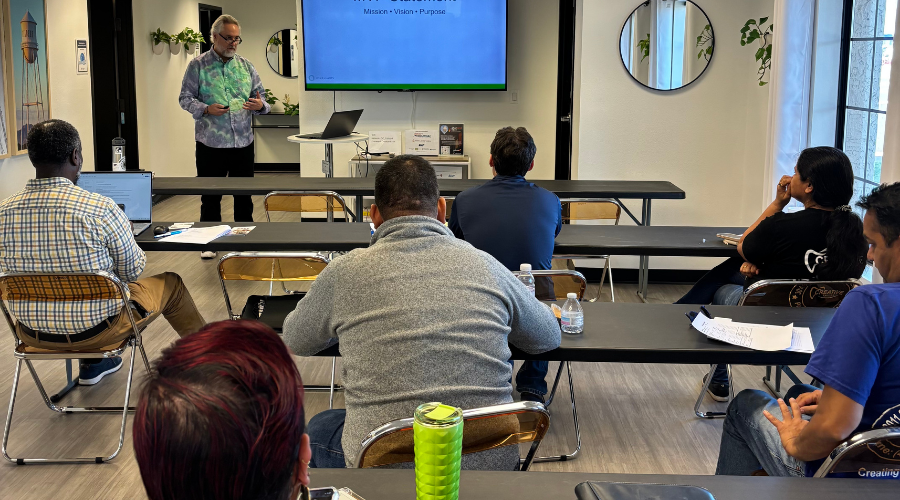
Stuart Preston with Cingularis led marketing discussions centered on removing the overwhelm and focusing on what truly drives results. Participants learned that effective marketing starts with clarity—clearly defining who you serve, what problem you solve, and why your business is the right choice.
The session explored how mission, vision, and purpose guide marketing decisions, from messaging to channel selection. Attendees were encouraged to focus on a few key strategies rather than trying to do everything at once. Topics included building a strong digital presence through a clear, user-friendly website, leveraging Google Business Profiles for local visibility, and tracking metrics that matter, such as leads, conversions, and repeat customers.
AI tools were introduced as supportive resources that can help streamline content creation, automate routine tasks, and improve consistency—without replacing the human voice behind the brand. The takeaway: marketing doesn’t have to be complicated to be effective.
Personal vs. Business Finances: Creating Clear Boundaries
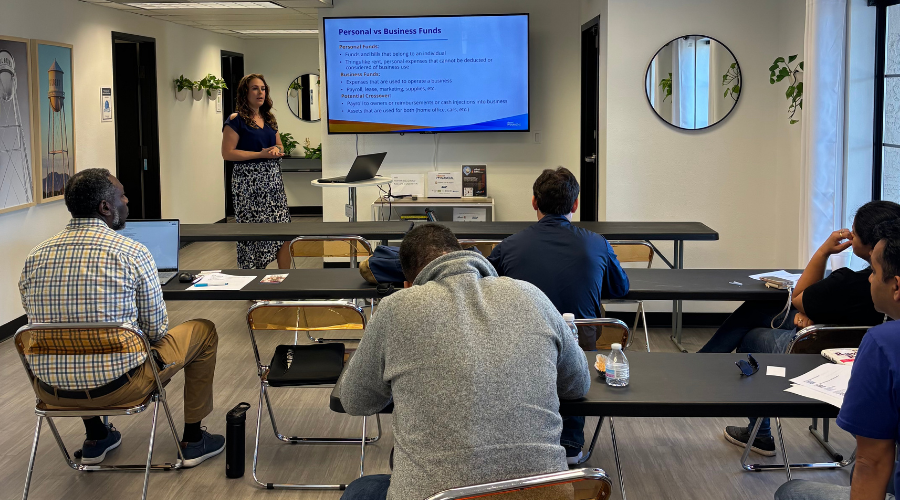
The final section led by Ashlee Hanover with Desert Financial Credit Union addressed one of the most common—and costly—mistakes small business owners make: mixing personal and business finances. Entrepreneurs learned why commingling funds increases liability risk, complicates tax reporting, and creates challenges when applying for financing.
The discussion clarified the difference between personal and business expenses, appropriate ways owners can pay themselves or reimburse expenses, and how lenders and regulators view financial separation. Attendees also explored how entity type impacts liability exposure and why clean financial records help protect personal assets.
A strong message closed the session: establishing clear financial boundaries from the beginning builds credibility, simplifies accounting, and supports long-term scalability. Business owners were encouraged to ensure their ABC team—Accountant, Banker, and Counsel—are aligned and working toward the same goals.
Continuing the Momentum at The CATALYST
Strengthen & Scale reinforced that entrepreneurs don’t have to navigate growth alone. The CATALYST exists to connect business owners with education, mentorship, and trusted resources that support each stage of their journey.
Through workshops, expert office hours, and partnerships with organizations like Maricopa SBDC and SCORE, The CATALYST continues to help entrepreneurs start strong, stay compliant, and scale with confidence.